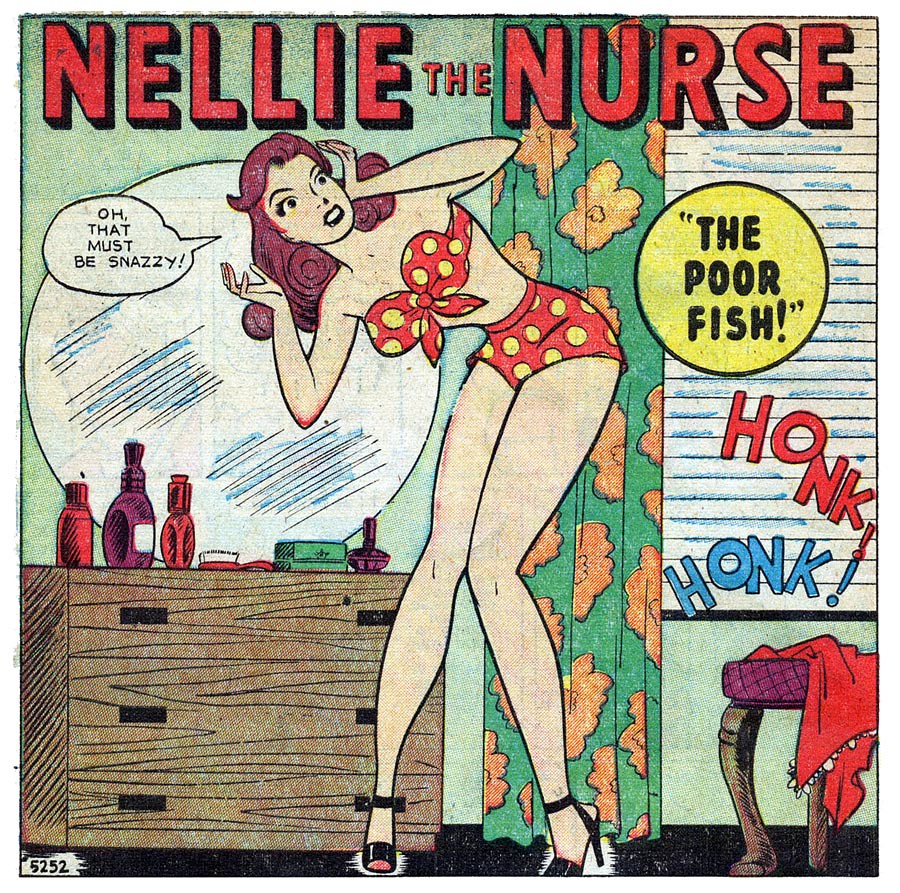
DC Comics, teaching an entire generation that abuse, misogyny and kidnapping was a-okay. Fortunately, we've all grown past that culturally.
Love Stories #150 (Jun-Jul 1973)
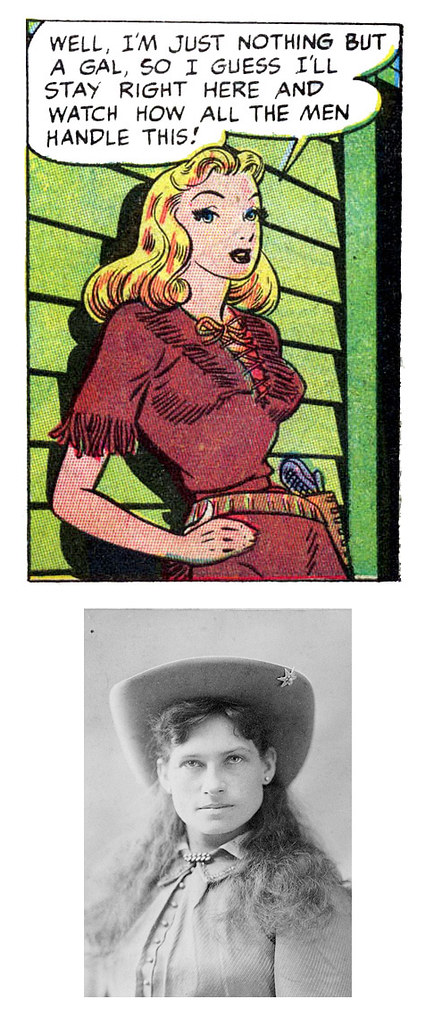
 It's no wonder he sleeps alone. This one-pager from Feature Comics #135 was published way back in June 1945, a time when comic books were not for girls!
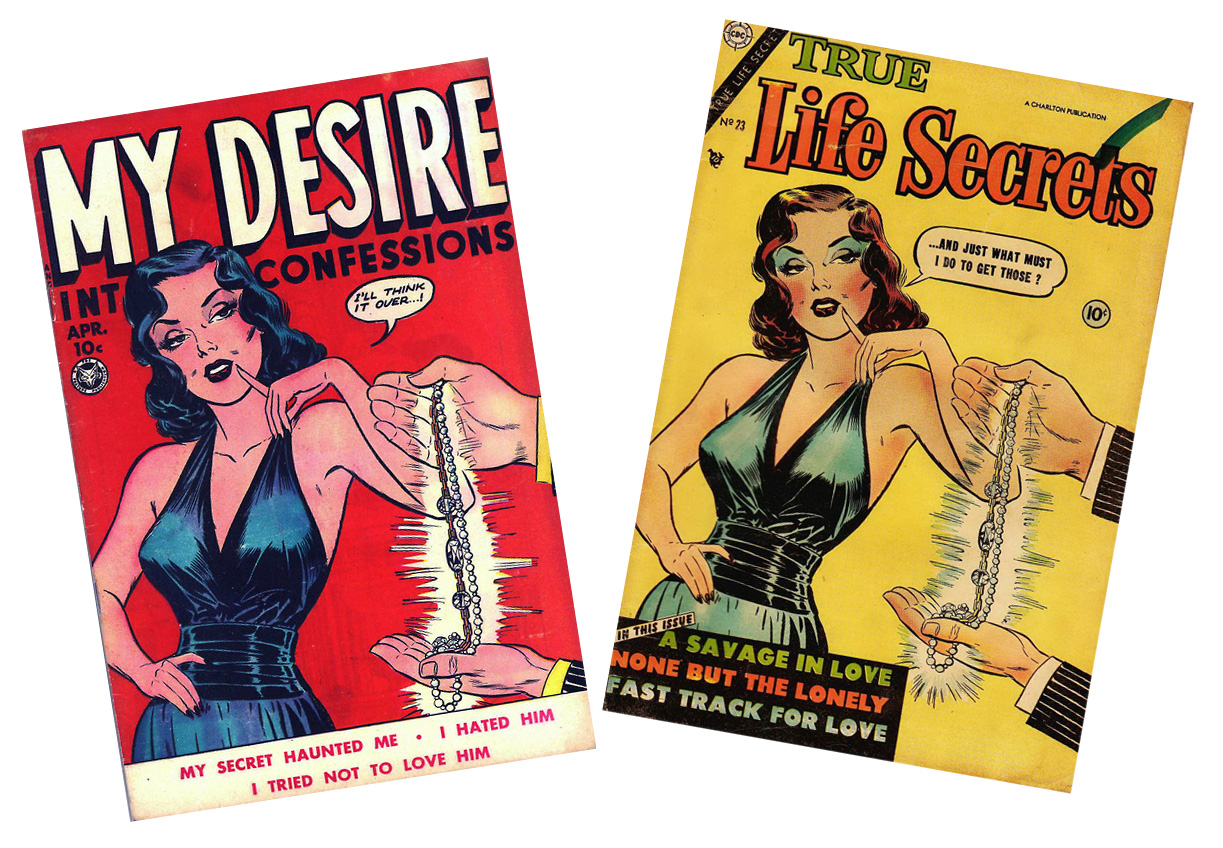 On the first cover by the time we see our heroine she was already salaciously propositioned and is mulling over her choice. On the second she is wryly, perhaps with amusement, dismissing a wolf. Both covers are iconically lurid but what a difference four years makes in the approach.
 I foresee a whole lot of 911 calls in her future.
 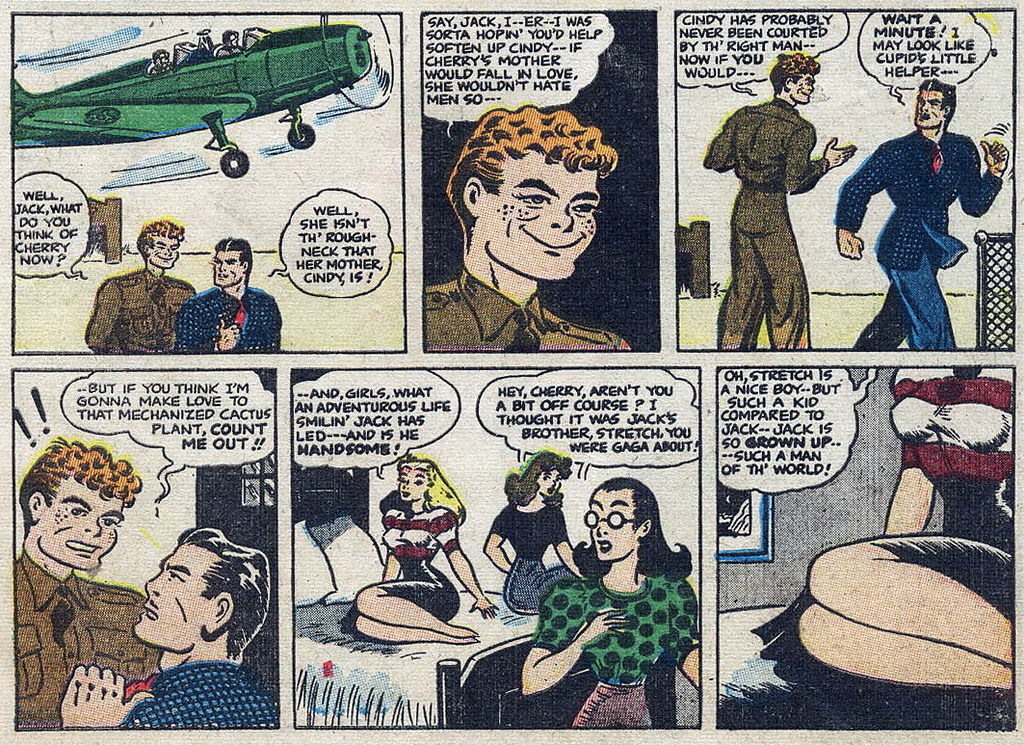 Forget subliminal shadows in well-defined musculature. Strips like this is why the Comics Code Authority was created. Yet these funnies served an unintended purpose beyond sales-inspiring titillation, giving the young access to some material that provided, albeit through an unrealistic filter set in place by mostly old men, education in what for the era were proper gender roles and societal expectations.
 Wow, the 90s. I hope by focusing in on the torso of Pele the artist was making a point about the pandering hyper-sexualization and blatant sales-grubbing cheesecake art of the era. Then again the creative crew may have defined human nature perfectly. There are basically two options to witnessing a ridiculously attractive demi-godess striding from a churning pool of molten lava and declaring she would destroy the Hawaiian islands with super-volcanoes: One is to run screaming the opposite direction and the other is to plan on how you are going to score with her.
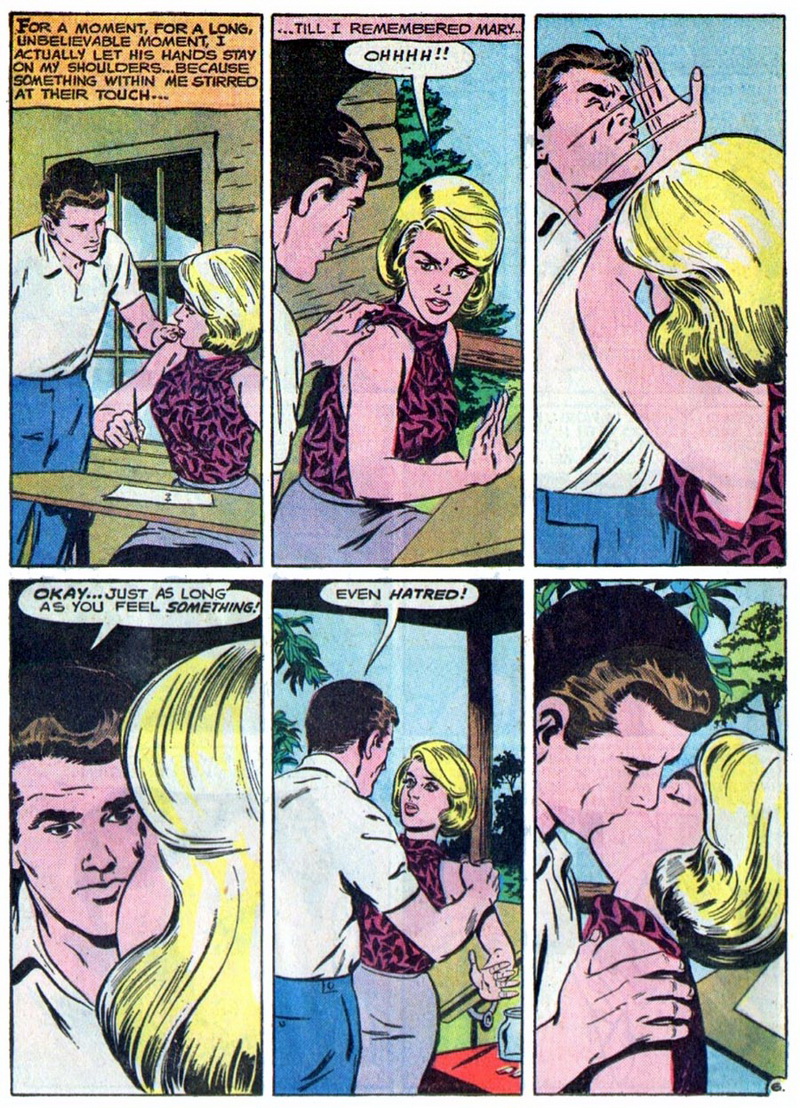 I guess there are worse foundations for a relationship. At least hatred is more honest than marrying for money.
 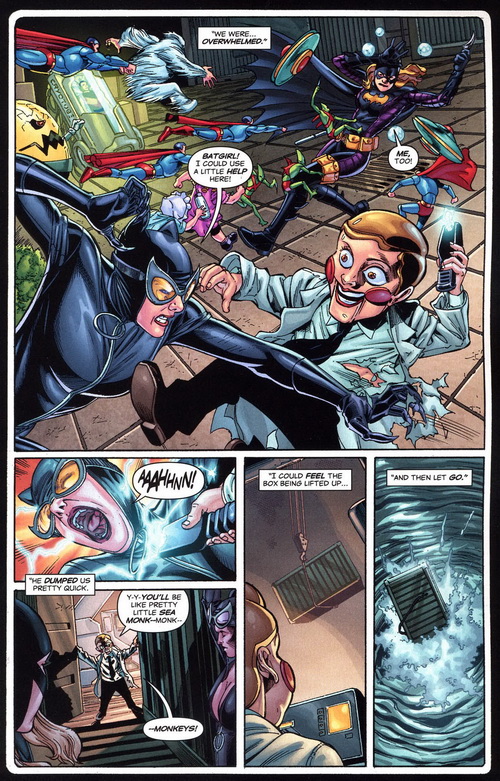 I don't know if her costume being unzipped once she is bound was intentional on the part of the creators but it looks like the Toyman robot, once it had Catwoman helpless, decided to play with the captive a bit. That adds an unstated layer of creepiness to the whole scene. That Catwoman was perhaps violated isn't even addressed in this story and in fact she is casually dismissed by Batgirl and Supergirl, a couple of young heroes who are acting just a bit too pleased with themselves over the whole thing. It would be interesting to see a hurt and angry Catwoman lecture the World's Finest Teens while she uses the real Toyman as a scratching post.
 It's 2009 and comic books are not for girls!